The Complete Flag Code Guide for Homeowners (2026 Edition)
Most people who fly the flag of the United States do it out of genuine pride. They want to do it right. But unless you served in the military or took a course in civics, nobody ever handed you the rulebook.
The Flag Code exists in Title 4 of the United States Code. It covers everything from what hours you can fly the flag, to how it must be lit at night, to what your HOA can and cannot legally tell you.
This guide collects every rule a homeowner needs to know, written in plain language, so you can display the flag with confidence every single day.
What the Flag Code Actually Is
The Flag Code was first codified in 1942, though its guidelines date back to the 1920s. It is federal law, found in Title 4, Chapter 1 of the United States Code.
Here is the part most people do not know: for private citizens, the Flag Code carries no criminal penalties. It establishes standards of respect, not punishments. You will not be fined or arrested for a display mistake. But for those who take pride in honoring the flag correctly, these rules matter.
State and local laws, and HOA rules, can add enforceable layers on top of the federal code. That is why understanding the full picture is important before you install a flagpole or raise your first flag.
When and How to Display the Flag
The foundation of the Flag Code is proper display. Get these basics right and you are already ahead of most homeowners.
• Display hours
The flag should be displayed from sunrise to sunset when outdoors. It may be flown 24 hours a day only if it is properly illuminated during the hours of darkness. A dedicated light source aimed at the flag is required. Ambient street lighting does not count. The LED Solar Flag Pole Light handles this automatically, activating at dusk without any wiring required.

• All-weather flags
The flag should not be displayed in rain or inclement weather unless it is an all-weather flag. Most modern nylon and polyester flags qualify. Check the product description before leaving your flag out in a storm.
• Proper orientation
The union, the blue field of stars, must always be in the position of honor. On a flagpole, it belongs at the peak. When displayed flat against a wall horizontally, the union is at the top left from the viewer's perspective. When hung vertically, the union is still to the observer's left.
• What the flag must never do
The flag should never touch the ground, the floor, or water. It should never be used as clothing, bedding, or drapery. It should never be flown upside down except as a signal of dire distress. Flying it upside down as a form of protest is not a recognized use under the Flag Code.
Half-Staff Rules Every Homeowner Needs to Know
Half-staff is one of the most searched topics in flag etiquette, and one of the most misunderstood. For a deeper look at respectful flag display in your neighborhood, see our full guide.
• Who orders half-staff
Only the President of the United States can order a national half-staff observance. State governors can order it within their own state. Private homeowners can lower their flag as a personal act of respect at any time. This is not prohibited.
• The correct half-staff procedure
Raise the flag briskly to full staff first, then lower it to half-staff. At the end of the day, raise it back to full staff before bringing it down for the night. Many homeowners skip that final raise, which is a common mistake worth correcting.
• Annual half-staff dates
Memorial Day: half-staff from sunrise until noon only, then raised to full staff for the afternoon through sunset. This is the most commonly misunderstood half-staff rule in the country. Patriots Day (September 11): all day. Pearl Harbor Remembrance Day (December 7): all day. The death of a current or former President triggers a 30-day half-staff order by presidential proclamation. Other senior officials typically follow a 10-day order.
Displaying the Flag on Your Home
Not every homeowner has an in-ground flagpole. Wall-mounted and bracket-style displays are just as covered by the Flag Code.

• Wall and building display
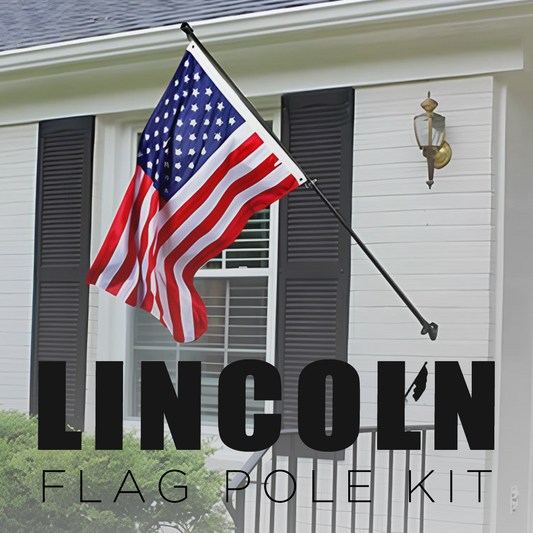
When the flag is displayed flat against a wall, the union must be at the top and to the observer's left. When projected from a building on a bracket, the union belongs at the peak of the staff, away from the building. The flag should not drape or press against the building surface.
• Window and balcony display
The flag may be displayed from a window on a small staff. The union must be at the peak of the staff, positioned away from the building. The Lincoln 6ft Wall Mount Kit is built for this type of residential application and includes everything needed for a clean, code-compliant install.
The Most Common Flag Code Mistakes
Even well-intentioned homeowners make these errors regularly. Knowing them puts you ahead of most.
• Leaving the flag up after dark without a light — the code requires illumination for 24-hour display. A solar light solves this entirely.
• Flying the flag through a rainstorm — unless your flag is rated for all-weather use, bring it in.
• Keeping it at half-staff all day on Memorial Day — it goes back to full staff at noon. This distinction matters.
• Flying it upside down as a statement — the Flag Code designates this for dire distress only, not protest.
• Letting the flag touch the ground during raising or lowering — use a second person or a tangle-free clip system when possible.
• Displaying a faded or tattered flag — a worn flag diminishes the display. Replace it and retire the old one with respect.
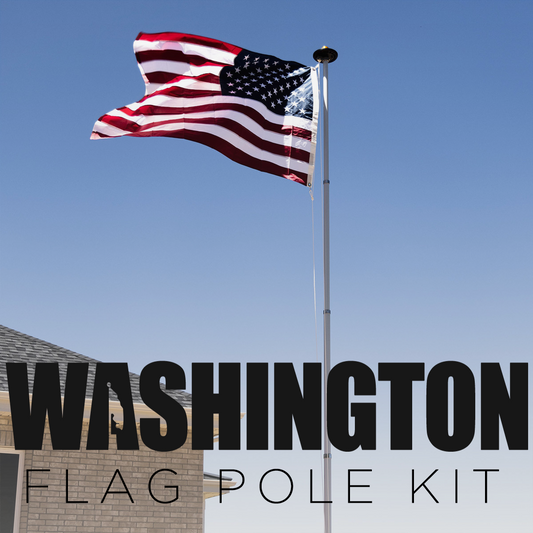
If you are ready to display the flag the right way, Stand has everything you need. Browse our full range of residential flagpole kits to find the right pole for your yard, your home, and your display.
Related Posts
Common Questions About the U.S. Flag Code Answered
How to Respectfully Retire a Worn Flag With Honor