What Size Flagpole Do You Actually Need? A Buyer's Decision Framework
Most homeowners who have been researching flagpoles for a week already know the basics. They have a yard. They want to fly the flag of the United States. They have a budget. What stops them from clicking "add to cart" is a specific, practical question: which product, at which size, in which configuration, is the right fit for their property?
Getting this wrong is expensive. A flagpole that is too short looks undersized against a two-story home. A kit missing the right hardware turns a Saturday project into a hardware store run. Choosing a style that conflicts with your HOA rules means starting over.
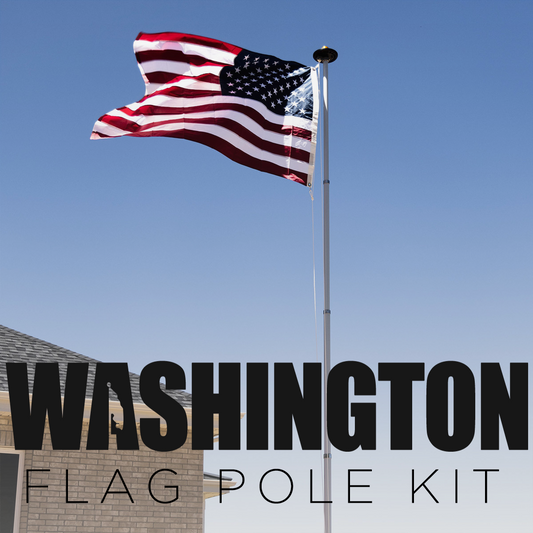
For most single-family residential properties, a 20-foot in-ground or telescoping flagpole in the 20–25 ft range is the correct size. Wall-mount kits suit smaller lots, condos, and HOA-restricted properties. Telescoping poles work best when low-maintenance operation matters. Sectional in-ground poles offer the most stability in high-wind regions. The right kit includes the pole, flag, hardware, and preferably a solar light. Match pole height to your house height: 1.25x to 1.5x the roofline is the standard formula.
How to Match Flagpole Height to Your Home?
The most common sizing mistake is choosing a height based on what looks big at the store. The correct reference point is your roofline.
The U.S. Flag Code does not specify a residential flagpole height, but the widely accepted industry standard calls for a pole height of 1.25 to 1.5 times the height of your home's peak roofline. For a standard two-story home at approximately 20–22 feet, that puts the ideal pole height at 25–33 feet. For a single-story home at 12–14 feet, a 15–20 foot pole is proportionally correct.
-
Single-story homes (under 15 ft roofline)
A 15- to 20-foot pole provides proper visual proportion. Anything taller on a small lot looks out of scale and may require a municipal permit. The 20-foot telescoping flag pole kit is the most popular choice in this category for a reason: it meets the height-to-home ratio, collapses for storm or maintenance, and designed for homeowner installation

-
Two-story homes (16–25 ft roofline)
A 20- to 25-foot pole is the minimum. Many homeowners in this range choose the 25-foot option to clear secondary rooflines, especially on properties with dormer windows, wraparound porches, or elevated landscaping. The Roosevelt Flag Pole Kit at 25 feet with sectional construction is built specifically for this range.

-
Large estates or elevated lots
Properties where the home sits above street level, or where a long driveway creates significant viewing distance, often need 30+ feet to achieve the same visual impact as a 20-foot pole on a flat suburban lot. Factor the grade change into your height calculation.
Which Flagpole Type Is Right for Your Property?
The four residential flagpole types each solve a different problem. Choosing the wrong one is not about quality, it is about fit.
-
Telescoping flagpoles
The telescoping design extends and locks at multiple height increments, typically 12, 17, and 20 feet, without ropes, pulleys, or hardware maintenance. Flag attachment uses a rotating sleeve at the top, which prevents wrapping. This is the right choice for homeowners who want to raise and lower the flag daily, for properties in areas with periodic high winds (the pole can be reduced in height), and for anyone who wants to avoid the ongoing maintenance of a traditional rope-and-cleat system.
-
Sectional in-ground poles
Sectional poles are assembled in sections and set into a ground sleeve with concrete. They are more rigid than telescoping options at equivalent heights and are the preferred choice in consistently high-wind regions. Installation takes longer and is less reversible, but long-term stability is superior. The 24-foot powder-coated black flagpole is a sectional option that adds architectural contrast against light-colored homes and stone facades.
-
Wall-mount flagpoles
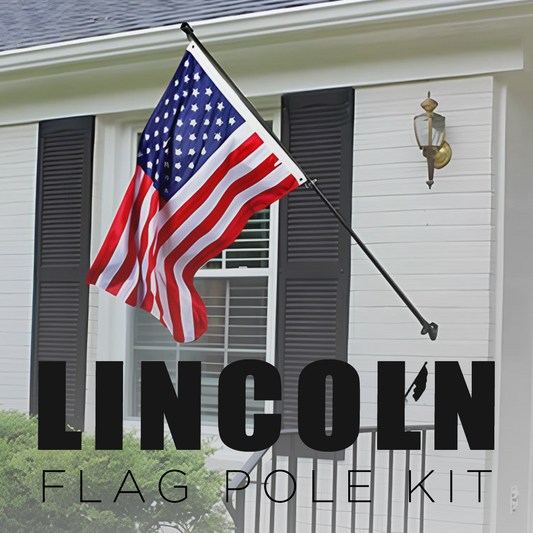
Wall-mount brackets with a 5- to 6-foot pole solve two specific problems: properties with no viable ground installation location, and HOA rules that prohibit in-ground poles. The Lincoln 6-ft telescoping wall mount kit is designed for this use case. A 6-foot wall mount at the correct angle positions the flag away from the structure and below utility lines while maintaining a visible, respectful display.
-
Portable and parade-style poles
Not covered in this guide. If you need a pole for events, tailgating, or temporary installation, contact Stand Flagpoles directly for product recommendations suited to non-permanent use.
What a Complete Kit Actually Includes (and What It Should Include)
A pole is not a kit. This distinction matters because incomplete kits create frustration and hidden costs.
A complete residential flagpole kit should include the pole, a flag matched to pole height, a ground sleeve (for in-ground installations), all hardware (snap hooks, truck/pulley assembly, cleat or locking mechanism), and ideally a solar flagpole light. Every kit includes the components needed for installation and display. Country of origin is identified on each product page.
The flag-to-pole ratio is frequently overlooked. A 3x5 flag is correct for poles up to 20 feet. For 20- to 25-foot poles, a 4x6 flag provides the right visual weight. For 25 feet and above, a 5x8 is standard. A flag that is too small disappears against a tall pole; a flag that is too large overpowers the display and wears faster in wind. Browse the flags of the United States collection to match flag size to pole height correctly.
The solar light stand is the accessory most buyers add after their first sunset. The U.S. Flag Code specifies that the flag should only be flown from sunrise to sunset unless it is illuminated after dark. A solar-powered ground light eliminates the need to lower the flag each evening without an ongoing electrical cost.
Flags to Fly Alongside the Flag of the United States
Many homeowners who choose a multi-flag display underestimate the order-of-precedence rules and the secondary pole requirements.
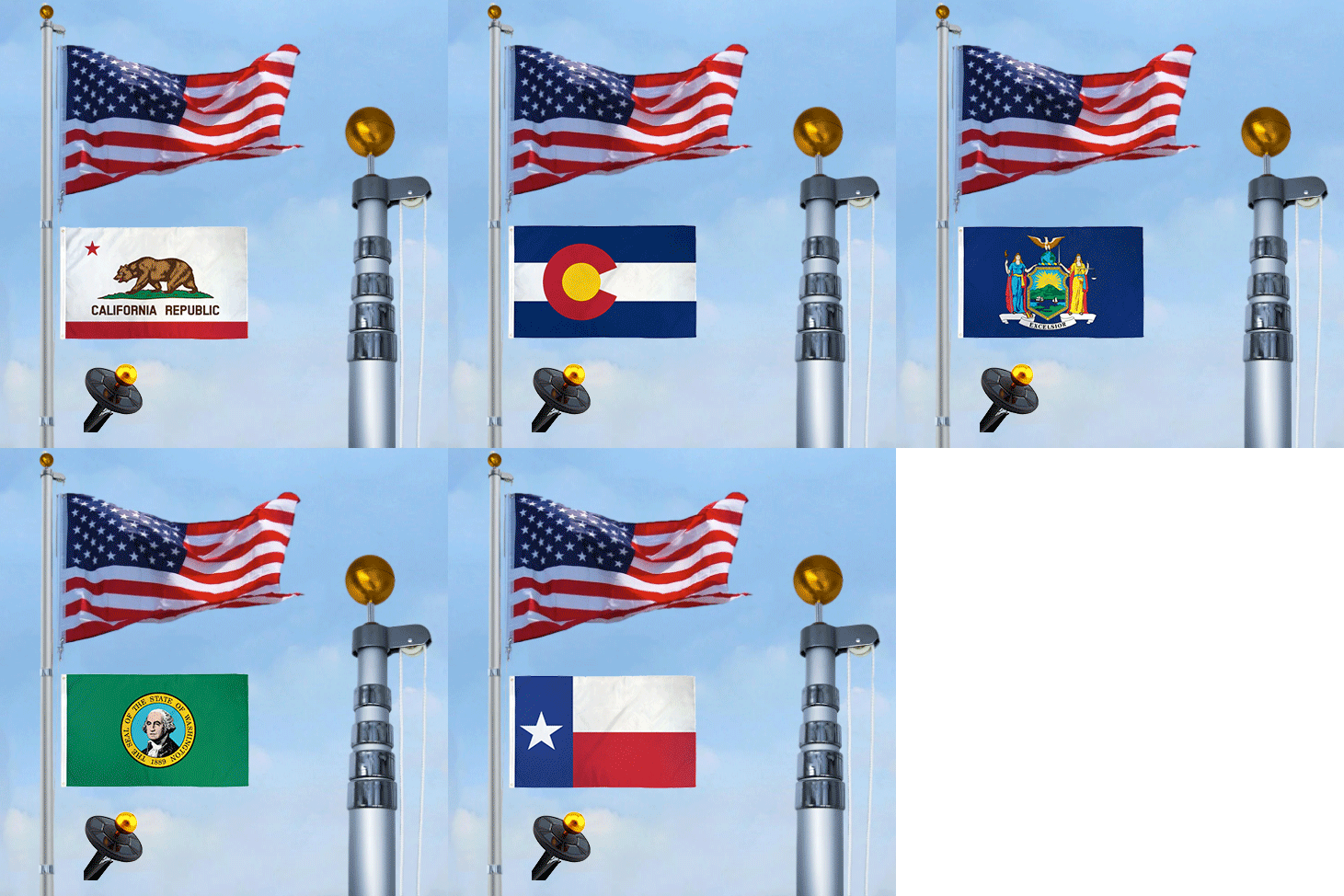
When flying additional flags on a single-pole display, the flag of the United States must always be at the top position. If you use a second in-ground pole on the same property, the U.S. flag must fly at equal or greater height. Flying a state flag or a branch-specific flag from the military flags collection requires understanding these rules before you purchase a second pole or a two-flag bracket. For a complete reference on flag code compliance, the complete flag code guide for homeowners covers the U.S. Flag Code in full.
How to Choose With Confidence Before You Order?
The right flagpole for your property comes down to four variables: your home height, your installation type (in-ground or wall mount), your wind exposure, and whether you need full-kit convenience or individual components.
Most residential buyers in a suburban setting with a two-story home and moderate winds will find the Roosevelt 25-foot kit or the 20-foot telescoping kit cover their needs completely. Homeowners in coastal or high-wind areas should read best flagpoles for high-wind areas before deciding on a telescoping versus sectional build. If this is your first purchase and you want a streamlined decision guide, best flagpole kits for first-time buyers walks through the selection criteria step by step.
When the right pole goes up in front of the right home, the flag of the United States flies the way it should: straight, visible, and properly proportioned. That is the result this guide is designed to deliver.
Country of origin is identified on each product page, including whether items are Made
in USA, Imported, or Made in USA with imported materials.
Related Posts: